What Are Social Skills and How to Develop Social Skills in Students?
BY ADMIN PUBLISHED March 10, 2026, UPDATED January 1, 1970
There are many students who are very outgoing and have no problem communicating, working with groups, and participating in class. Then there are other students who may require some encouragement. Students who require some encouragement will spend much more time observing than contributing and may experience difficulties in group settings. Both types of behaviour are acceptable because students develop at different rates.
However, regardless of whether students develop socially quickly or slowly, social skills are just as important as academic skills. In this day and age, being able to communicate with others, work collaboratively, and convey your ideas clearly are vital skills for students to possess both in and out of the classroom. Therefore, the real question is not simply "what are social skills," but rather "how do students develop social skills in a practical sense?"
What Are Social Skills?
First and foremost, we need to define what social skills are. Therefore, before we get into the nitty-gritty details of social skill development, let us define social skills. Social skills are those behaviours that allow an individual to interact effectively with others. Examples of social skills include communication, listening, empathy, cooperation, and recognising social signals. Simply put, social skills enable Students to:
- Clearly express their thoughts and ideas.
- Understand another's perspective or point of view.
- Develop relationships with others.
- Be confident in social situations.
Social skills extend further than conversation alone; they affect a person's attitudes, behaviours, and confidence.
Importance of Social Skills in Student Life
Although making friends is a significant part of why social skills are so important, it does not stop there. Typically, students who exhibit good social skills (i.e., social skills for kids) demonstrate:
- More active participation in the classroom.
- Improved Teamwork capabilities.
- Increased self-confidence.
- Stronger emotional intelligence.
Academic settings reflect the importance of social skills. When students communicate effectively, they tend to ask questions, clear up misunderstandings, and participate in discussions.
Why Do Some Students Struggle with Social Skills?
Not all students develop their social abilities automatically. Common explanations for difficulty include:
- Being introverted
- Limited exposure to group activities
- Fear of judgment from others
- Over-reliance upon digital forms of communication
Understanding the above factors will help develop social skills effectively. Many Students do not lack social ability; they typically lack the opportunity and direction.
How to Develop Social Skills in Students
We now move to the second most important aspect, how to teach Students to Develop Social Skills in an intuitive manner. It takes time and practice to Develop Social Skills. It develops incrementally through repeated practice in supportive environments. Let us examine some concrete methods.
Encourage Open Communication
Open communication is required to facilitate the development of social skills among students. The simplest things can help promote open communication:
- Ask open-ended questions.
- Allow Students to express their opinions freely.
- Provide Students with the freedom to express their ideas.
Students who perceive that they are being listened to are more likely to feel more confident. Practising how to Improve Social Skills frequently begins with establishing open lines of communication.
Group Activities and Team-Based Learning
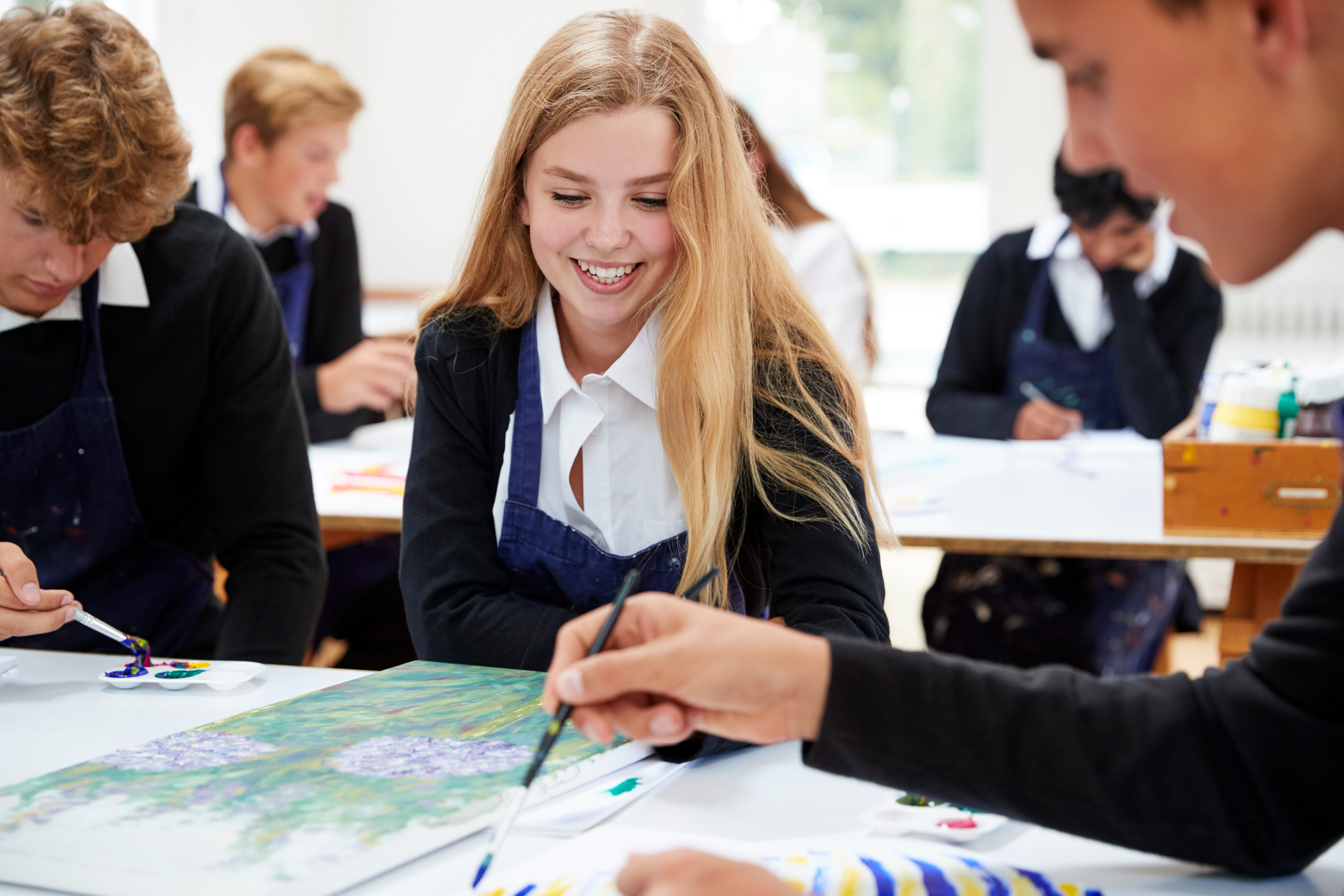
Interaction fosters growth. Group projects, team assignments, collaborative work, etc. They are instrumental in helping Students Develop Social Skills. As such, Students acquire the capacity:
- To listen
- Share ideas
- Respect diverse perspectives
Participation in group-based activities naturally fosters social skills in kids. Learning occurs via engagement in the process.
Teaching Active Listening
Communication is not solely about talking; listening is an equal component. Students should be taught:
- To maintain eye contact.
- Do not interrupt while someone else is speaking.
- Comprehend what another says.
Active listening is a primary component of social skills. When students practice listening, their communication improves.
Building Empathy in Students
Empathy enables Students to comprehend how others feel. This is perhaps the most vital element of social skills. Teachers and parents can foster empathy by:
- Discussing various opinions.
- Encourage people to act with kindness towards one another.
- Create a culture of respect among the participants.
- When Students learn how to connect emotionally with others, the value of social skills is evident.
Role-Playing and Real-Life Scenarios
Role-play is an ideal technique for building social abilities. By practising:
- Introduce themselves
- Handle disagreements.
- Contribute to discussions
This prepares them for authentic events in life. When students know how to improve their social skills, they become more confident in their environment.
Encouraging Participation in Activities
Organizational events are a great place for Students to engage in social development. Sports, debate teams, drama programs, cultural organisations, etc. They are wonderful opportunities for kids to connect with one another.
Reducing Dependence on Digital Communication
Technology provides several advantages; however, excessive use can lead to less direct interaction. To support developing social skills, students should be encouraged to:
- To increase the potential for face-to-face communication between individuals.
- Participate in non-digital activities.
- Spend quality time interacting with other young people.
Finding a balance between using online platforms and engaging in offline interactions will help in developing stronger interpersonal connections.
Role of Schools in Developing Social Skills
Schools serve as the foundation for developing social skills. Classroom environments, along with teaching methods and activities, can significantly impact a child's social skill development.
Structured educational institutions, such as reputable schools in Palam Vihar, Gurgaon, India, provide a conducive setting for students to collaborate and communicate with one another under the watchful eye of teachers. They guide the students during:
- Classroom group discussions
- Presentations
- Collaborative work
By incorporating a variety of learning experiences into classrooms, utilizing collaborative approaches, and promoting student participation. Educators emphasise the significance of social abilities for long-term growth.
Role of Parents in Supporting Social Development
Parents also contribute significantly to their children's social interaction. Simple techniques used by parents at home that can enhance their children's ability to interact socially include:
- Communicating openly with their children
- Educating their children in polite manners
- Listening attentively to their children's thoughts
- Encouraging their children to interact socially
Working collectively toward enhancing their children's ability to develop social skills by combining efforts from schools and parents will result in greater results for developing social skills.
How to Improve Social Skills in Shy Students
Many children require additional assistance due to inherent introversion. For shy children, gradual development of social abilities is preferred over rapid development. Begin with:
- Single-conversation exchanges
- Small group interactions
- Positive reinforcement of efforts
Step by step, confidence grows as children learn how to improve their social skills.
Long-Term Benefits of Strong Social Skills
Good social skills benefit a child throughout his or her lifetime. Children with good social abilities:
- Perform better in interviews
- Build professional relationships successfully
- Deal with challenges appropriately
These abilities will positively influence both their academic performance and future employment opportunities, as well as numerous other areas of life.
Creating a Positive Social Environment
The environment influences growth. Students’ progress better in supportive environments. A positive environment includes:
- Encouraging respect among participants through respectful communication
- Equal possibilities for participation
- Promote self-expression among participants
Acceptable environments naturally foster social skills in kids. Progress occurs when kids feel comfortable.
Final Thoughts
Knowing what social skills are is merely the starting point. The ultimate goal should be to develop social skills progressively through repeated practice.
Social abilities lay the foundation for communication. When kids learn how to improve their social skills, they become better individuals. Since education is not only about acquiring knowledge. It is about connection.