IB Syllabus & Exam Pattern Breakdown for 10th, 11th & 12th: Subjects, Format & Tip
BY ADMIN PUBLISHED April 10, 2026, UPDATED June 12, 2026
When researching the IB curriculum, you'll see right away that it's structured differently from most other boards. It has a more open-ended approach and can be a little hard to follow at first. As a result, students and parents alike will generally begin asking similar questions about the IB syllabus. Some examples, such as How does the IB curriculum differ from other curricula?
More importantly, what are the topics studied by students through the classes of 10th, 11th and 12th? These questions have multiple layers, and that is exactly why it's so important to understand the IB syllabus. Once you have an idea of its structure, things become easier to understand. Here we provide information in a format that offers greater clarity about your educational options.
What Is IB Syllabus and Its Full Form?
Let’s start from the basics.
It is commonly known as the International Baccalaureate. In essence, it is an internationally recognised educational system. Designed to educate students and equip them with the skills to critically evaluate their surroundings and conduct research, the IB program is geared towards developing a student's global perspective.
So, when you ask yourself or others, "What is an IB syllabus?" your response should encompass more than subjects. The IB program defines a conceptual structure that focuses on:
- Developing inquiry-based learning
- Understanding concepts
- Using skills in conjunction with their academic studies
Unlike traditional boards, the IB system encourages students to think, not just memorise.
How the IB Curriculum Is Structured Across Grades
One of the reasons the IB exam syllabus feels different is because it’s divided into programmes rather than just classes. Broadly, it looks like this:
- Middle Years Programme (MYP) → roughly up to Class 10th
- Diploma Programme (DP) → Class 11th and 12th
Each stage builds on the previous one. By the time students reach the IB board syllabus class 12, they are already trained to handle research based learning and analytical thinking. This continuity is what makes the IB system structured yet flexible.
IB 10th Syllabus: Foundation Through the MYP
The IB 10th syllabus (under MYP) is less about finishing chapters and more about building understanding. Students study a range of subject groups such as:
- Language and Literature
- Sciences
- Mathematics
- Individuals and Societies
- Arts
- Physical Education
But here’s what makes it different. Students are encouraged to connect subjects. A science concept might link to a real-world issue. A humanities lesson might involve project work. The focus is not just “what did you learn?” but also “how did you apply it?”
IB Class 11th Syllabus: Choosing Direction
Moving into the IB class 11th syllabus, things start becoming more focused. Students enter the Diploma Programme and select subjects based on their interests and future goals. Typically, students choose subjects from six groups:
- Language and Literature
- Language Acquisition
- Individuals and Societies
- Sciences
- Mathematics
- Arts (or another subject from above groups)
At this stage, students also begin core components that are unique to IB:
- Theory of Knowledge (TOK)
- Extended Essay (EE)
- Creativity, Activity, Service (CAS)
This is where the IB syllabus starts shaping independent thinking and research skills.
IB Board Syllabus Class 12th: Depth and Application
By the time students reach the IB board syllabus class 12th, the focus shifts towards depth. Subjects are studied at two levels:
- Higher Level (HL) → deeper understanding
- Standard Level (SL) → balanced coverage
Students also complete:
- Extended Essay (a research project)
- Internal Assessments
- Final examinations
This stage of the IB exam syllabus prepares students for university level thinking. It’s less about memorising answers and more about presenting ideas clearly.
IB Exam Pattern: How Students Are Evaluated
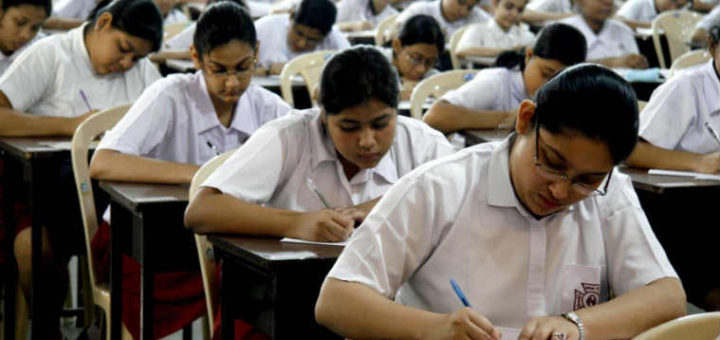
The IB exam syllabus is not just about final exams. Assessment is divided into:
- Internal Assessments (projects, assignments)
- External Assessments (written exams)
This combination ensures that students are evaluated throughout the year. Unlike traditional systems, where one exam decides everything, IB focuses on consistency. Students are assessed on:
- Understanding
- Application
- Analysis
- Presentation
That’s what makes the evaluation system more comprehensive.
How IB Differs from Traditional Boards
At this point, you might be wondering how IB compares with other boards. The difference becomes clearer when you look at learning style. Traditional systems often focus on:
- Fixed syllabus
- Exam, oriented preparation
- Memorisation
The IB syllabus, on the other hand, focuses on:
- Conceptual learning
- Research and analysis
- Continuous assessment
It’s not about which is better, it’s about what suits the student.
Skills Students Develop Through IB Learning
One of the strongest aspects of IB is the skill set it builds. Students don’t just study subjects. They develop abilities that stay with them. These include:
- Critical thinking
- Research skills
- Time management
- Communication
Interestingly, this connects closely with the importance of social skills as well. IB classrooms often involve discussions, presentations, and collaborative work, which naturally improve interaction and confidence. Learning becomes both academic and personal.
Challenges Students May Face in IB Curriculum
It’s not always easy. The IB syllabus requires consistency and effort. Students may initially find it challenging because:
- It involves regular assignments
- It demands independent thinking
- It requires time management
But over time, students adapt and once they do, learning becomes more meaningful.
Tips to Perform Well in IB Syllabus
Adapting to IB is less about working harder and more about working smarter. Here are some practical tips for handling the IB exam syllabus effectively:
- Stay consistent with assignments
- Focus on understanding, not memorising
- Manage time between subjects and projects
- Start the Extended Essay early
- Participate actively in discussions
These habits make a noticeable difference.
Role of Schools in Supporting IB Learning
The success of IB also depends on how it is delivered. Schools that implement the curriculum effectively create a strong learning environment. At institutions like DPSG Palam Vihar, the IB framework is supported through:
- Structured academic planning
- Teacher guidance and mentorship
- Balanced focus on academics and activities
This support helps students navigate the IB syllabus more confidently.
Is IB the Right Choice for Every Student?
This is a common question. IB works best for students who:
- Enjoy understanding concepts deeply
- Are comfortable with research and projects
- Prefer interactive learning environments
It may feel demanding initially, but it prepares students for higher education effectively. Choosing IB should be based on learning preference, not just reputation.
Final Thoughts
Understanding what the IB syllabus is not about memorising its structure. It’s about recognising how it approaches learning differently. From the IB 10th syllabus to the IB board syllabus class 12th, the focus remains consistent, building thinkers, not just learners.
The IB exam syllabus may seem complex at first, but once students adapt, it offers clarity, flexibility, and depth. And beyond academics, it supports skills that truly matter including communication, collaboration, and the importance of social skills because education is not just about what you study, it’s about how you think.