
How EdTech Drives Experiential Learning
BY ADMIN PUBLISHED August 18, 2025, UPDATED August 18, 2025
In today’s fast-changing world, education goes beyond textbooks, lectures, or rote learning. Schools are becoming places that encourage active, interactive, and engaging learning. At the centre of this transformation is EdTech, a strong tool that connects knowledge to real-world application. For students, this shift means that learning is not just about listening, it’s about doing, exploring, and experiencing.
Why Experiential Learning Matters
It is often said that we remember 10% of what we hear but nearly 90% of what we see or do. This is why experiential learning has become essential to 21st-century education. By using technology, schools can give students opportunities to practice, experiment, and ask questions in ways that traditional teaching cannot match.
For example, consider virtual reality (VR) field trips. A history lesson about the Indus Valley Civilization can turn into a virtual exploration where students can "walk" through ancient streets. At the same time, augmented reality (AR) lets them hold a beating human heart in their hand during a biology class. These interactive experiences spark imagination and deepen understanding.
From Smart Classrooms to Digital Learning Spaces
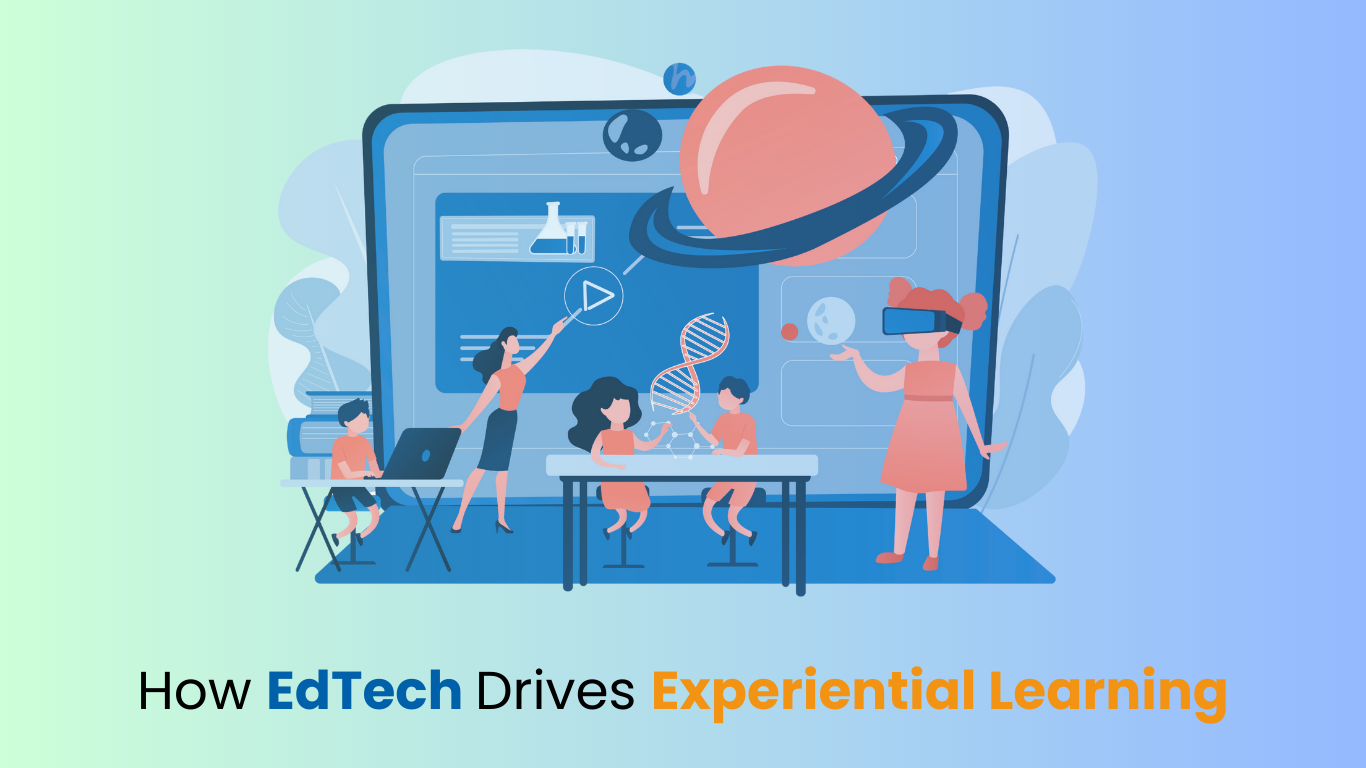
Walk into a modern school, and you'll quickly notice the difference. Traditional blackboards are being replaced by smart classrooms where interactive screens and digital resources bring theoretical concepts to life. Imagine a science class where, instead of just reading about the solar system, students can explore planets in 3D, rotate them, and even simulate their orbits. Such immersive experiences make learning exciting, relatable, and easier to remember.
Furthermore, IT-enabled labs further enhance this advantage. Here, students build robots, design applications, and conduct hands-on experiments. These spaces nurture curiosity and critical thinking, two essential skills that memorizing definitions cannot develop. When a child codes a robot or tests a scientific hypothesis in real time, they are not just learning a subject; they are experiencing knowledge in action.
More Engagement, Better Learning Outcomes
The implementation of EdTech also leads to tangible results in classrooms. Students are more attentive, motivated, and eager to learn when the learning process feels enjoyable and interactive. Instead of passively listening to lectures, they actively participate in the classrooms.
As a result, schools that integrate EdTech reflect higher student engagement rates, improved academic scores, and a surge in collaborative learning. Group projects integrating digital tools encourage teamwork, while gamified learning platforms make even complex subjects less intimidating. When students experience the joy of creative problem solving, they develop confidence and ownership of their learning.
Beyond Scores: Fostering Lifelong Skills
Perhaps the most important contribution of EdTech-driven experiential learning is the persistent focus on building skills beyond academics. In a world where knowledge is widely accessible, skills like problem-solving, creativity, adaptability, and digital literacy prepare students for the future.
Academic institutions that embrace experiential learning through technology create learners who are inquisitive and self-driven. For instance, inquiry-based projects encourage students to ask questions, research answers, and present their findings. Such experiences go far beyond rote preparation for exams; they prepare children for the real challenges of life.
The School’s Role in this Transformation
For schools, adopting EdTech is not just about keeping up with trends; it is about giving students the perfect stage to explore their inner potential. By designing smart classrooms, setting up innovation labs, and encouraging inquiry-based learning, schools create a thriving ecosystem where every child feels inspired to learn in their own way.
This human-centred approach ensures that technology is not replacing teachers but empowering them. Teachers become facilitators who guide students in navigating digital tools, ensuring that technology serves as a medium for deeper, meaningful learning.
Conclusion
Education is no longer about simply filling young minds with information. It focuses on helping them experience knowledge in action. With EdTech, schools create opportunities for children to learn by doing, connect theory with practice, and turn curiosity into innovation.
Experiential learning supported by technology is not just improving academic outcomes; it is shaping confident, creative, and capable learners who are ready to succeed in tomorrow’s world.
Also Read: How To Establish Moral Values in Students?


