
How to Make Your Child an Active Learner
BY ADMIN PUBLISHED December 14, 2021 , UPDATED August 13, 2026
Children learn best when they actively participate in the learning process instead of simply memorising information. Encouraging curiosity, asking questions, and exploring real-world experiences help them become confident, independent learners. Through active learning activities, interactive learning methods, and project based learning, children develop stronger problem-solving abilities and critical thinking skills for students.
Parents and teachers can also use hands-on learning activities and meaningful student engagement activities to make lessons more enjoyable and memorable. This guide explores practical strategies that support active learning while helping children build confidence, improve communication, and achieve long-term academic success.
Why Active Learning is Important for Children
Active learning encourages children to become participants rather than passive listeners during lessons. When students engage in discussions, ask questions, and solve problems independently, they develop greater confidence and curiosity. Regular student engagement activities improve communication, strengthen understanding of concepts, and nurture independent thinking. Children also become more willing to collaborate with classmates, express ideas, and take responsibility for their learning. Over time, these experiences contribute to stronger academic performance, better decision-making, and long-term educational growth while preparing students with essential life skills needed for future success.
Encourage Classroom Participation and Discussions
A classroom that encourages participation creates confident learners who are comfortable expressing ideas, asking questions, and working collaboratively. Teachers can provide meaningful opportunities for every child to contribute through discussions, presentations, debates, and group activities. Such interactive learning methods help children understand concepts more effectively while developing communication and teamwork skills.
Ways to encourage participation include:
- Create opportunities for every student to answer questions and share opinions.
- Organise group discussions and collaborative classroom projects.
- Encourage respectful debates that build confidence and logical reasoning.
- Recognise student efforts to motivate regular participation.
- Create a supportive classroom where children feel comfortable expressing ideas.
- Include peer-learning sessions that promote teamwork and knowledge sharing.
These strategies help students remain engaged throughout lessons while improving confidence, communication, and classroom involvement.
Use Interactive and Hands-On Learning Activities
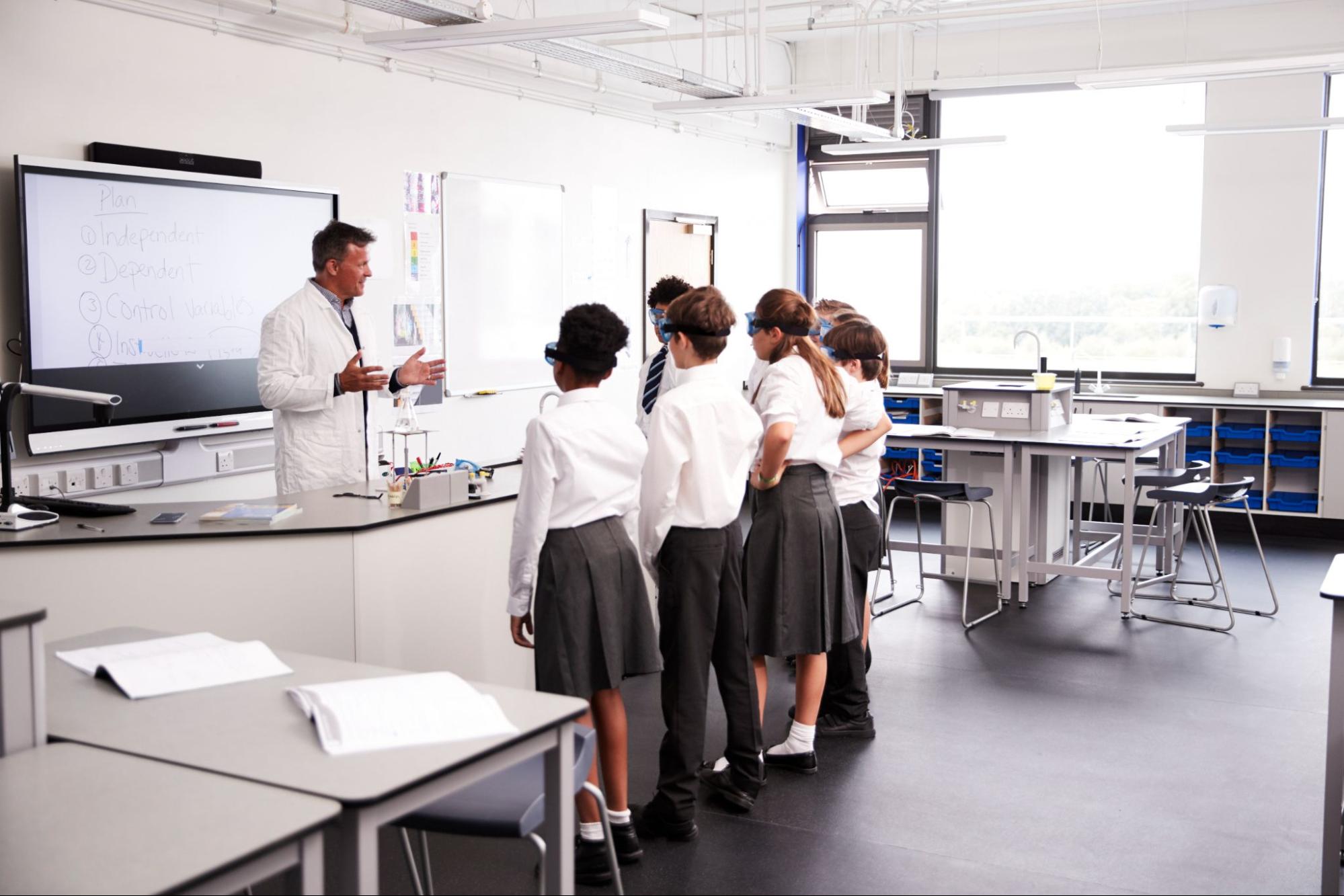
Children understand concepts more effectively when they actively participate instead of only listening to explanations. Hands-on learning activities and active learning activities encourage exploration, creativity, and practical application of knowledge. These experiences make lessons enjoyable while improving concentration, curiosity, and long-term understanding. They also support project based learning, allowing students to solve problems, work in teams, and apply classroom concepts to real-life situations.
Effective ways to make learning interactive include:
- Begin lessons with short brain warm-up exercises or puzzles.
- Use educational games, science experiments, and creative projects.
- Include role-playing and storytelling to explain concepts.
- Organise project based learning activities that encourage teamwork.
- Keep children engaged with quizzes, challenges, and classroom competitions.
- Encourage students to create models, presentations, or simple demonstrations.
- Provide opportunities for reflection after each activity to reinforce learning.
These approaches help children stay motivated, actively participate, and develop stronger problem-solving and collaboration skills.
Use Visual Learning Methods for Better Understanding
Visual learning helps children understand complex concepts quickly by presenting information in an engaging and memorable format. Educational videos, presentations, illustrations, diagrams, charts, and infographics simplify abstract ideas and make classroom lessons more interactive.
Visual content also strengthens memory retention because children are more likely to remember information presented through images than text alone. Combining visual resources with classroom discussions and hands-on learning activities creates a richer learning experience that keeps students interested, improves comprehension, and supports stronger academic performance across different subjects.
Benefits of Active Learning for Students
The benefits of active learning extend far beyond academic achievement. Children who actively participate in lessons become more confident, curious, and independent learners. Instead of memorising information, they develop a deeper understanding by applying knowledge in practical situations. Regular student engagement activities, collaborative projects, and classroom discussions encourage creativity, communication, and teamwork while helping children remain motivated throughout their educational journey.
Some important benefits of active learning include:
- Better understanding and long-term knowledge retention.
- Improved communication and presentation skills.
- Enhanced critical thinking skills for students through problem-solving.
- Greater confidence during classroom participation.
- Higher levels of motivation and curiosity.
- Stronger collaboration and teamwork abilities.
- Increased independence and responsibility for learning.
- Better academic performance through practical application of concepts.
How Parents Can Support Active Learning at Home
Parents play an important role in helping children develop a positive attitude towards learning beyond the classroom. By creating an encouraging environment, asking thoughtful questions, and participating in educational activities, families can reinforce concepts learned at school. Supporting active learning activities at home also strengthens confidence, curiosity, and independent thinking while complementing classroom instruction.
Parents can encourage active learning by:
- Setting aside dedicated time for reading and educational activities.
- Encouraging children to ask questions and explore new ideas.
- Using everyday situations for practical learning experiences.
- Supporting project based learning through creative home projects.
- Limiting distractions and creating a comfortable study space.
- Appreciating effort rather than focusing only on results.
- Promoting discussions that improve critical thinking skills for students.
With consistent encouragement, children become more confident learners who enjoy exploring, questioning, and applying knowledge in everyday life.
How Schools Help Children Become Active Learners
At DPSG International, learning goes beyond textbooks by combining academic excellence with experiential learning opportunities. Students participate in engaging classroom discussions, collaborative projects, practical activities, and technology-enabled lessons that promote meaningful learning experiences.
A balanced learning environment encourages curiosity, creativity, and independent thinking while improving student engagement activities through interactive classroom methods. Teachers use age-appropriate teaching strategies to support holistic development, strengthen communication skills, and build confidence. By nurturing every child's individual potential, DPSG International prepares students to become lifelong learners who are ready to succeed in both academic and real-world environments.
Conclusion
Helping children become active learners requires consistent encouragement from both parents and educators. Through active learning activities, hands-on learning activities, interactive learning methods, and meaningful classroom participation, children develop confidence, curiosity, and lifelong learning habits. When schools and families work together, students gain the knowledge, skills, and motivation needed to achieve lasting academic success and holistic development.


