
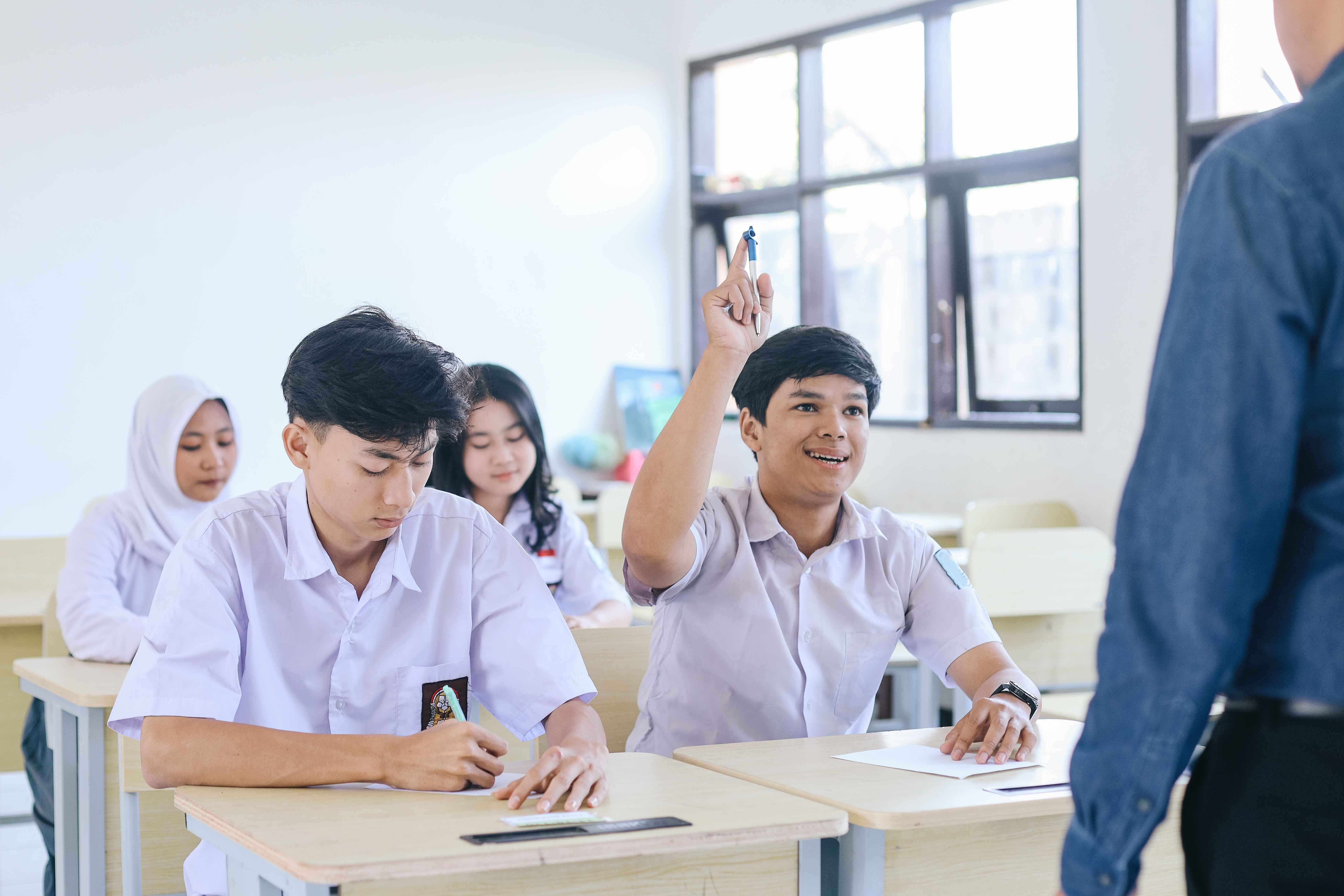
How to Build Critical Thinking Skills in School Students
BY ADMIN PUBLISHED April 7, 2026, UPDATED July 17, 2026
One student reads a chapter, learns the definitions and writes the answers they have been given. A second student reads the chapter but asks, "Why?" What if this changes? What if we do this? Now, that's the difference: critical thinking.
Knowledge in the classroom isn't good enough anymore. They must comprehend, question and apply. This is where students' critical thinking skills are important.
So, rather than focusing on what critical thinking skills are, it becomes more important to understand how I can build critical thinking skills in my learning process. Let's understand that in action.
What Are Critical Thinking Skills, Beyond the Definition
If you look at textbooks, you’ll find a straightforward answer to what is critical thinking skills, the ability to analyse information objectively and make reasoned judgments. But in real life, it looks like this:
- A student questions a concept instead of accepting it blindly
- A learner connects two different topics to understand a bigger idea
- A child evaluates whether information is reliable or not
In simple terms, critical thinking skills help students think independently and that’s where the real value lies.
Why Critical Thinking Skills Matter More Than Ever
We live in a time where information is everywhere. Students are constantly exposed to data, opinions, and content, not all of it accurate. This is where the importance of critical thinking skills in education becomes clear. Students need to:
- Distinguish facts from opinions
- Evaluate sources of information
- Make informed decisions
- Solve problems logically
The benefits of critical thinking skills are not limited to academics. They extend into everyday life. Students who think critically don’t just learn better. They understand better.
What Does Critical Thinking Look Like in the Classroom?
Sometimes, we assume critical thinking is something advanced. Something only older students develop. That’s not true. Even younger students show critical thinking skills in students when they:
- Ask questions during lessons
- Challenge ideas respectfully
- Suggest alternative answers
- Explain their reasoning
These small behaviours indicate a shift from passive learning to active thinking and that shift is what schools aim to build.
How to Develop Critical Thinking Skills in Students
Now comes the real question, how to develop critical thinking skills in a way that actually works? It doesn’t require complex tools. It requires a change in approach. Let’s look at what helps.
Encourage Questions Instead of Just Answers
Many classrooms focus on getting the “right answer.” But learning improves when students are encouraged to ask questions. Simple prompts can help:
- Why do you think this happens?
- Can there be another solution?
- What would you do differently?
When students start asking questions, they begin developing critical thinking skills naturally. Curiosity is the starting point.
Move Beyond Rote Learning
Memorisation has its place, but it should not be the only method. To build critical thinking skills in education, students need to:
- Understand concepts
- Apply knowledge
- Analyse outcomes
For example, instead of memorising a science definition, students can:
- Observe experiments
- Predict outcomes
- Explain results
This shift improves understanding.
Use Real-Life Examples and Situations
One of the most effective ways to improve critical thinking skills is to connect learning with real life. When students see how concepts apply outside textbooks, they engage more deeply. For instance:
- Discussing real-world problems
- Analysing case studies
- Relating lessons to daily experiences
This approach strengthens the benefits of critical thinking skills by making learning relevant.
Promote Discussion-Based Learning
When students talk, they think. Group discussions, debates, and classroom conversations play a major role in how to improve critical thinking skills. During discussions, students:
- Listen to different viewpoints
- Form their own opinions
- Defend their ideas
- This process sharpens thinking.
Silence does not build thinking, but interaction does.
Give Open-Ended Problems
Not every question should have one correct answer. Open-ended questions encourage exploration. For example:
- What could be different if this condition changes?
- How would you solve this problem in another way?
Such questions push students to think beyond standard answers. This is a key part of how to develop critical thinking skills effectively.
Teach Students to Reflect
Reflection is often overlooked. After completing a task, students should ask:
- What did I learn?
- What could I do better?
- What was challenging?
Reflection strengthens understanding as it is an important step in how to improve critical thinking skills over time.
Role of Teachers in Building Critical Thinking
Teachers play a central role. The way a lesson is delivered can either encourage or limit thinking. Teachers who focus on critical thinking skills in education:
- Encourage student participation
- Ask thought-provoking questions
- Allow room for discussion
- Value different perspectives
Teaching is not just about explaining. It is about guiding thought.
How Schools Create a Thinking Environment
A school’s approach matters just as much as individual teaching methods. In structured academic environments like the Best Schools in Ghaziabad, learning is often designed to go beyond textbooks. This includes:
- Interactive classrooms
- Project-based learning
- Collaborative activities
- Critical analysis exercises
Such environments support the development of critical thinking skills in students consistently because thinking is not taught in one lesson, it is built over time.
Common Barriers to Critical Thinking Development
Even with the right intention, certain habits can limit progress. These include:
- Overemphasis on memorisation
- Fear of making mistakes
- Lack of open discussion
- Time pressure in classrooms
Understanding these barriers helps in improving how to develop critical thinking skills more effectively, students need space to think. Not just pressure to perform.
How Parents Can Support Critical Thinking at Home
Learning does not stop at school. Parents can support critical thinking skills in students by:
- Encouraging conversations
- Asking “why” and “how” questions
- Allowing children to express opinions
- Discussing real-life situations
Simple interactions at home can make a big difference. Thinking grows through everyday experiences.
Long-Term Benefits of Critical Thinking Skills
The benefits of critical thinking skills extend far beyond school. Students who develop these skills:
- Make better decisions
- Adapt to new situations
- Solve problems independently
- Communicate ideas clearly
These abilities are essential in higher education and careers. Critical thinking is not just an academic skill instead it is a life skill.
Final Thoughts
Understanding what is critical thinking skills is only the beginning. The real focus should be on building it consistently through daily learning experiences. When students are encouraged to question, analyse, and reflect, they develop stronger critical thinking skills in students naturally.
The importance of critical thinking skills in education lies in preparing students not just for exams, but for life. In progressive academic environments like the Best Schools in Ghaziabad, this approach is becoming a priority because the future belongs to those who don’t just learn but also think.


